

Epson Scanners in the Healthcare Industry
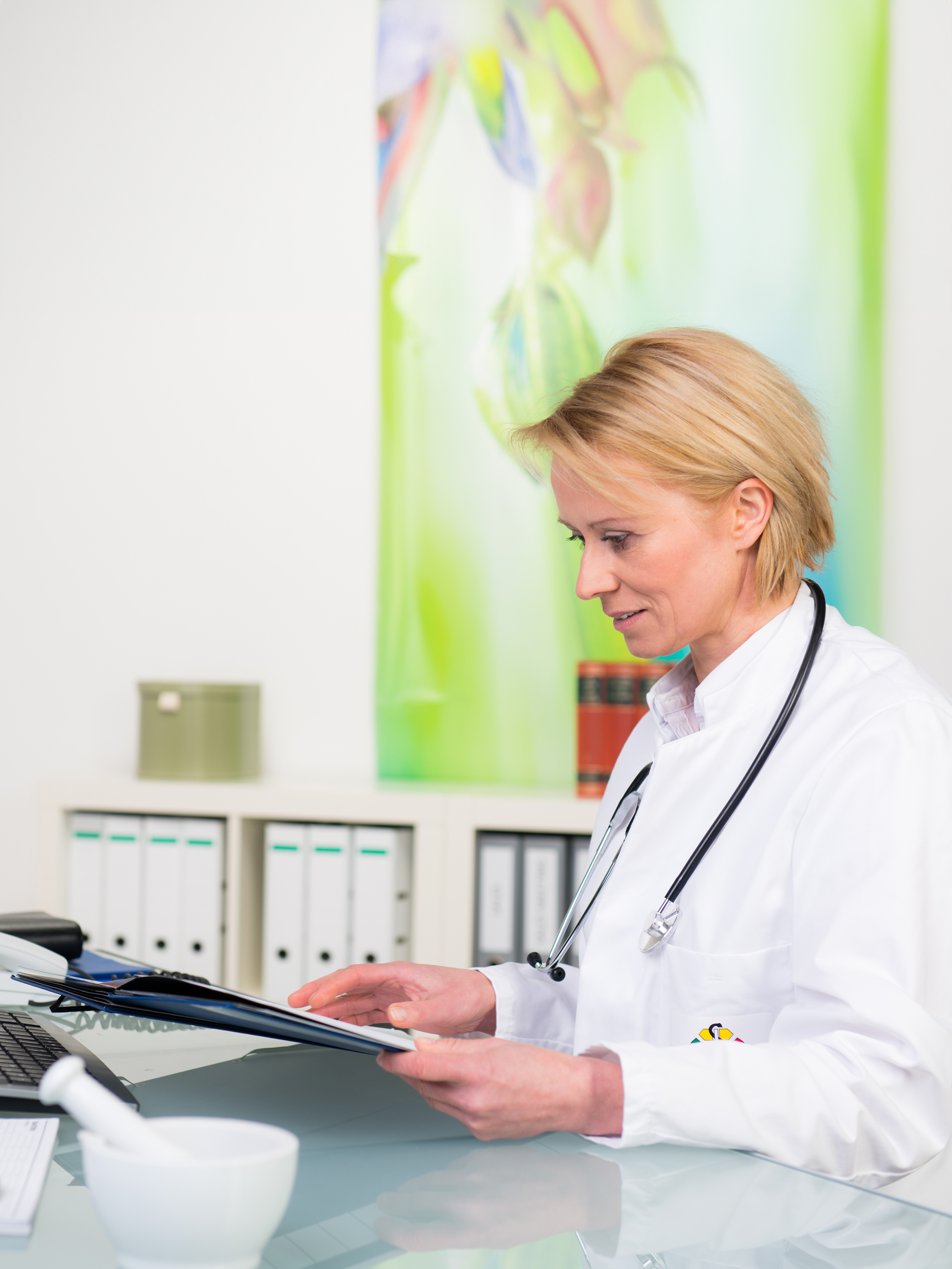
Epson Scanners in the Healthcare Sector with Enhanced Security Requirements and Authentication
The association, which operates four psychotherapy clinics (a training clinic, a general clinical clinic, a clinic for children and adolescents, and a neuropsychology clinic), offers psychotherapeutic treatments for adults based on the latest research. The team’s psychological psychotherapists provide services covering the entire spectrum of psychiatric and psychotherapeutic diagnosis and treatment and treat approximately 1,000 patients per year.
The outpatient clinic is also very well equipped in the IT environment, as two of the clinics already rely on Epson printers and scanners for the input and output of their wide variety of documents. In addition to an Epson Enterprise WF-C17590 copier, various WorkForce Pro WF-C579R and WorkForce Pro WF-C5790 models are also in use there. Five WorkForce DS-790WN document scanners handle the digitization of paper documents.
Olliver Berg, IT Manager at the “Polyclinic Institute Outpatient Clinic for Psychotherapy at Johannes Gutenberg University Mainz,” explains: “We’ve been using five Epson DS-790WN scanners in two of our four facilities since early 2024. We are currently evaluating whether to roll out the devices to the remaining buildings as well, since the units we have in use have proven themselves very well in the demanding clinical environment of the back office, in the therapy rooms, and in the storage area—each with their own very different tasks.”
In the back office, the Epson scanners process standard office documents for our DokuWare document management system. These are the kinds of documents found in every company—such as letters, personnel files, invoices, and so on.
In the therapists’ workspaces—which are organized as a “shared workspace” at our facility—the scanners primarily digitize therapeutic drawings, comments, or handwritten notes created during sessions. In addition, there are external documents such as doctors’ letters, which even today are often still sent by mail.
Finally, in our magazine, we use Epson scanners to process the paper patient records stored there for digital archiving. After the introduction of the digital patient record (e-record), we decided to first digitize the records of newly enrolled patients for final archiving and then gradually digitize the older records.”
Across all scanners, this adds up to a considerable volume. While therapists typically process around 1,000 pages per month, the magazine often handles 3,000 sheets or more. Most of the documents scanned on all scanners are DIN A4, though DIN A5 and even DIN A6 pages occasionally need to be digitized as well. With older files, however, there may also be formats that are uncommon by today’s standards. Berg comments: “But that’s no problem at all, because even different formats don’t faze the Epson scanners. In our experience, their feeder processes all formats—including a wide range of paper weights—quickly and without any issues.”
Safety first!
Data security plays a very important role in the healthcare sector. Because one of the goals of installing the scanners in the outpatient clinic was to ensure that every user could scan from any device—regardless of the number of devices available, which may still change depending on future developments—the requirements have become even more stringent. After thorough discussion with Epson’s authorized reseller, the facility therefore set up a central user management system using the OpenLDAP standard[1], making it easy to manage all users. Scanner users authenticate directly at the devices via an attached card reader[2] using their RFID card. The card’s chip number is scanned, stored in LDAP, and linked to the corresponding access rights. For the devices in the therapy rooms, this includes the path to the individual personal directories where the scanned data is automatically saved.
Berg adds: “Our scanners operate almost exclusively in ‘standalone’ mode—that is, without a PC. The large display on the Epson scanners makes them very easy to use, and with the push of a button, we convert the scanned documents directly to PDF/A format and save them in the directory associated with the RFID card, where they are then available for further processing. To this end, employees have access to the industry solution ‘PsychoWare,’ which was developed with our involvement and is now widely used throughout Germany, particularly in the context of research outpatient clinics.”
To further enhance the security of patient data, all documents in the personal scan folders are automatically deleted daily. The data is also encrypted during transmission over the network. In addition, the “Scan-to-Print” service is available, allowing the scanners to produce a paper copy of the documents using one of the Epson printers or copiers available on the network.
Reliability and speed are twice as important in everyday ambulance work!
Although Epson printers, copiers, and scanners have proven to be very reliable and durable in daily use, the outpatient clinic plays it safe when it comes to service as well. As a result, there is a maintenance contract that covers not only the scanners but also the WorkForce Pro printers and copiers in use. This ensures that the clinic is protected in case of an emergency and can maintain daily operations without disruption for the benefit of its patients.
“My colleagues are very impressed by how easy the Epson scanners are to use, as well as their durability and speed. Their ease of use has made any training unnecessary, and precisely because they work so reliably, I don’t even notice they’re there—and as the IT manager in charge, that’s all you could ask for from a device,” Berg says with a smile.
The Polyclinic Institute for Psychotherapy at the University of Mainz is equipped by:
LaserHOST GmbH
Edisonstraße 13
63512 Hainburg
Phone: 06182-9272-0
Email: info@laserhost.de
Website: www.laserhost.eu
Epson WorkForce DS-790WN:
- Network scanner WITH advanced authentication features; setup of multiple user accounts locally or remotely (supports LDAP)
- ScanWay – Standalone scanning: Scan directly to the network, cloud, email, or a USB drive—even without a computer
- Connections: USB 3.0, Wi-Fi, Wi-Fi Direct, Gigabit Ethernet
- High-speed scanning at up to 45 pages/min./90 images/min. (with the 100-sheet ADF)
- Large display with a 10.9-cm color touchscreen, as well as customizable presets and layouts
[1] The Lightweight Directory Access Protocol (LDAP) is a network protocol for querying and modifying information in distributed directory services. Its current and third version is specified in RFC 4510 through RFC 4532, with the actual protocol defined in RFC 4511.
[2] TWN4 MULTITECH 2 LEGIC LF HF by Elatec.
Related Posts


Share This Story!
